


SPECIAL REPORT:
By Abbas Ibrahim, with contributions from Kabiru Fulatan; Abdullahi Yusuf; Salisu Ibrahim; Mustapha Muhammad and Muhammad Ya’u
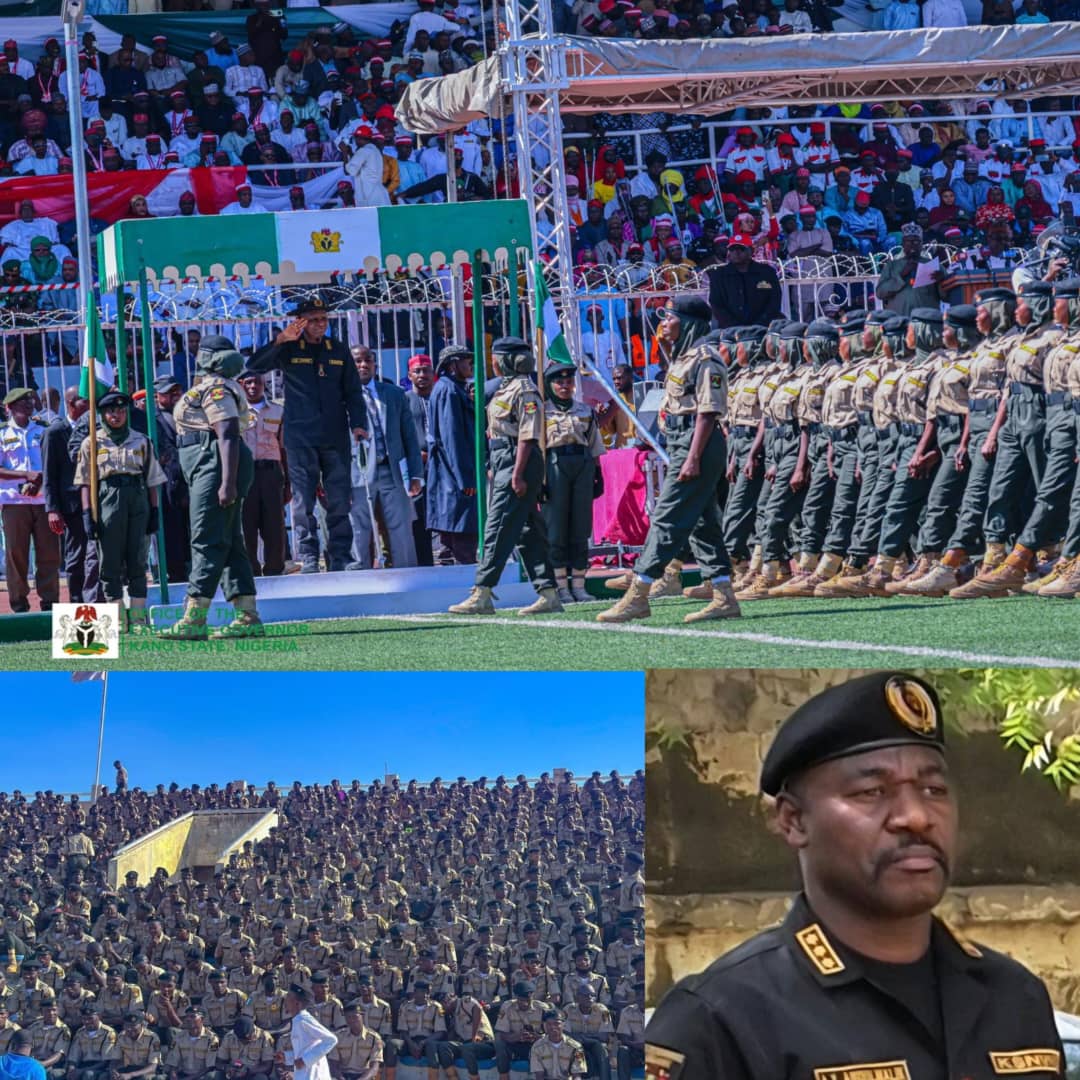
The Kano Neighborhood Watch Security Corps, became operational on Dec 23, 2025. And the Corps is gradually showing promise in supporting law enforcement in the area of gathering intelligence, foiling kidnapping attempts, responding to fire outbreaks, and assisting in murder investigation.
With public cautious optimism and calls for continued professionalism and accountability, the Corps operating with a structured command system at state, sector, and local government command levels, the corps, now in its “consolidation phase,” is expected to rise above board by focusing on building stability and expanding presence amidst challenges of its limited visibility, need for sustained oversight and prevention of potential abuse of authority.
Checks Naija in this Special Report examined the operations, public expectations and the challenges before the Security Corps:-
Barely eleven weeks after its inauguration on December 23, 2025, the Kano State Neighbourhood Watch Security Corps is gradually emerging as an important pillar in the state’s effort towards strengthening grassroots security.
Although still in its formative stage, early operations of the Corps suggest that the community-based security outfit is beginning to carve out a role in supporting law enforcement agencies and improving intelligence gathering across local communities.
The Commander General of the corps, Lieutenant Colonel Aminu Yusuf Abdulmalik (rtd.), says the first phase of the initiative has focused primarily on building operational stability, coordinating deployments, and establishing a visible presence across local government areas.
According to him, the corps is currently in what he describes as a “consolidation phase,” where structures are being strengthened while personnel gradually expand their activities across communities.
“We have begun to see encouraging indicators, particularly in intelligence gathering and faster responses to community distress calls,” Abdulmalik told Checks Naija.
According to him, operatives of the corps have already begun working alongside established security agencies through joint patrols and coordinated surveillance efforts aimed at detecting threats before they escalate.
“Across several parts of the state, the Neighbourhood Watch has already participated in operations linked to tackling criminal activity”, he explained.
He said, personnel of the corps have so far assisted security agencies in responding to security challenges related to kidnapping and banditry in Bagwai, Shanono, and Gwarzo local government areas. In Dambatta Local Government Area, “our operatives have also helped at foiling a kidnapping attempt and also responded during a fire outbreak at Singa Market.
In Dorayi quarters of Gwale LGA, members of the corps have assisted authorities in handling a murder investigation, highlighting the role community-based intelligence can play in strengthening security responses.
Beyond these early interventions, the corps has also established a structured command system designed to bring security operations closer to the grassroots, he stressed.
The operational framework, created under the law establishing the corps, includes a state command headquarters, five sector commands, local government commanders, and ward-level units.
This layered structure is intended to ensure that security presence is not only centralized but embedded within communities themselves.
For the leadership of the corps, proximity to residents is central to the success of the initiative. “Many security threats begin at the community level,” Abdulmalik explained. “By having structured presence closer to the people, we are able to gather information early and respond faster.”
One of the concerns often raised about community based security outfits in Nigeria is the potential for political interference or misuse of authority. However, the leadership of the Kano Neighbourhood Watch was optimistic that the Corps’ recruitment and leadership appointments were carried out strictly in a professional manner. Integrity, educational qualifications, leadership ability, physical and mental fitness were among the standards used during the recruitment exercise.
“Our operational appointments are not driven by political considerations. The guiding principles are professionalism, discipline, and service to the people, “Abdulmalik emphasized”.
To further safeguard public trust, the corps has introduced internal accountability mechanisms designed to regulate the conduct of its personnel. These include a mandatory code of conduct, training on human rights and lawful use of force, and operational guidelines governing interactions with civilians.
The leadership also maintains what it describes as a zero tolerance policy toward extortion, harassment, or unlawful detention.
Residents who wish to report misconduct can do so through designated complaint channels at local government offices or via hotlines at the corps’ headquarters located at the premises of KNARDA Headquarters, along Hadejia Road.
Despite the reported progress, the Commander General acknowledges that the Corps’ presence is not yet spread across the state. “We are just starting but our presence would be felt across the State, he stressed.
Some communities are yet to feel our presence. The limited visibility of.our operations, is a development to ongoing recruitment, screening, and training exercises being conducted in collaboration with the Civil Service Commission, he said.
“Now that the recruitment and training exercises are completed, residents will see greater presence across all wards. ”Deployment of our personnel will be strategic and intelligence-driven,” he said.
Beyond the immediate security landscape of Kano State, the emergence of the Neighbourhood Watch Corps is also taking place within a broader national conversation about policing reforms in Nigeria. Calls for the establishment of state police have intensified in recent years as policymakers and security experts debate ways to address the country’s complex and evolving security challenges.
Within this context, Abdulmalik believes community-based security structures like the Neighbourhood Watch could serve as an important grassroots support system for any future decentralized policing framework.
“We see the corps as a community-based intelligence structure that can complement future state policing arrangements if such reforms are eventually implemented,” he said.
However, public reactions to the initiative have been mix, as some expresses cautious optimism and constructive scrutiny.
A public policy analyst, Malam Tijjani Sarki believes the corps could significantly strengthen grassroots security if its operations remain professional and well regulated. Community-based security initiatives can enhance surveillance and improve information sharing between residents and formal security agencies, when its operations are carried out professionally, he said.
He however stressed the need for sustained oversight, which he said must be critical to prevent potential abuses of authority. “The long-term success of such initiatives depends on professional recruitment, institutional safeguards, and protection from political interference,” he said.
A secondary school teacher, Khadija Naseer, believes it may still be too early to fully assess the impact of the corps.
According to her, at a point in time, she observed the performance of some operatives during a public gatherings and community events. But, the true test of their functionality will be their contribution in the day-to-day protection and safety of their immediate neighbourhood.
“With time and proper training, they should be able to focus more on protecting lives and property within communities,” she said.
A trader at Kwari Market, Yasir Sani Abdullahi, described the recruitment of 2,000 operatives as a positive beginning but argued that a larger workforce may be necessary for effective coverage. “Kano is a large and densely populated state. Expanding the Corps’numerical strength to around 10,000 personnel could significantly improve coverage in both urban and rural areas,”.he said.
For now, however, the leadership of the corps says its immediate priorities remain clear: completing operational deployment across all wards, strengthening discipline and accountability among personnel, and deepening partnerships with communities to enhance intelligence gathering.
The Commandant General, Abdulmalik said, “Our goal, is to build a professional, disciplined, and people centred security corps that contributes meaningfully to peace and stability in Kano State.”
Now that the Corps is barely three months after its launch, all eyes are on the State’s Neighbourhood Watch to either operate as a professional Security Corps or sink as a tool of abuse of power.