


Kano State Government has clarified on why it had to recover official vehicles from former commissioners.
It said, the vehicles are public property and cannot be converted into personal assets after leaving office by the former commissioners.
By Our Reporter
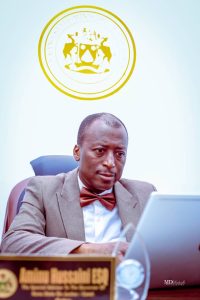
Barrister Aminu Hussaini, Special Adviser to Governor Abba Kabir Yusuf on Justice and Constitutional Matters, who made the clarification described the steps taken by the government as a lawful and necessary measure to safeguard public resources.
“The recent action taken by the Kano State Public Complaints and Anti Corruption Commission was carried out in line with due process and backed by a valid court order,” he said
“In every functioning democracy, public assets belong to the people, not to individuals temporarily entrusted with power,” he stated, emphasizing that “holding public office is a temporary responsibility held in trust for citizens”.
While stressing that all government assets including vehicles, equipment and facilities , are purchased with public funds and remain the exclusive property of the state, he said those opposed to the decision can seek redress in courts, if they felt uncomfortable.
“The office itself is not owned by anyone. It is a public trust. Vehicles and other official tools are attached to the position, not to the individual occupying it,” Hussaini explained.
He dismissed claims that official vehicles should be treated as entitlements after leaving office, describing such arguments as inconsistent with both legal principles and good governance standards.
“An official vehicle is assigned strictly for the execution of public duties. Once those duties cease, the privilege also ceases,” he added.
The Special Adviser clarified that the government did not deploy force or act in secrecy, but instead followed legal procedures in reclaiming the vehicles from former commissioners who had resigned from their positions but were unable to release the vehicles in their possession.
Although these former officials have cited statutory provisions to justify retaining the vehicles, Barrister Hussaini maintained that government property remains state owned unless a competent court rules otherwise.
“If every departing political appointee reinterprets entitlement laws in their favour, the state treasury would suffer,” he warned.
He noted that accountability should not be misconstrued as political persecution, adding that the issue transcends political alignments.
“The people of Kano state deserve leaders who understand that public office is a loan, not a legacy. When the tenure ends, the keys must be returned to the rightful owners , the public,” he said.
While the development has raised public concern over the management of public assets and the culture of entitlement in Nigeria’s political system, Barrister Hussaini said that the state governor, Alhaji Abba Kabir Yusuf is a leader that always want to ensure accountability in governance.
He advised those in contention that disputes over asset ownership should be resolved through the courts, not through resistance to lawful means.