




By Abdulkareem Mohammed

In the familiar tradition of Northern Nigeria, many of our heroes and heroines depart quietly—without adequate recognition, documentation, or celebration.
Their contributions fade into private memory when they ought to be preserved in public record.
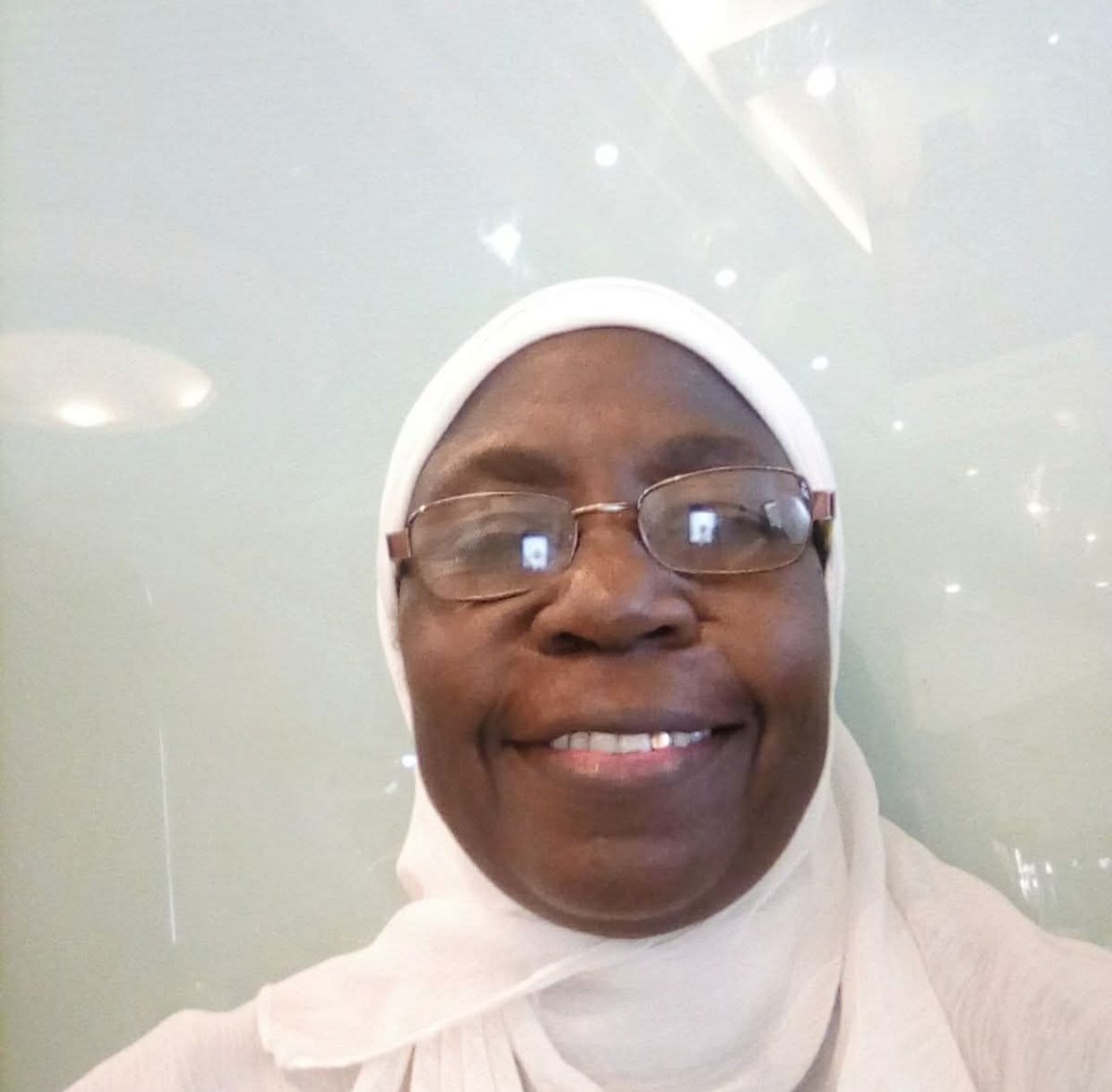
This tribute seeks to alter that pattern by recording the life and legacy of a woman whose voice became part of Kano’s collective memory: Lami Hafsat Machudo (1954–2026).
I first encountered Lami in 1979 when I joined the Nigerian Television Authority (NTA) as a Producer.
By then, she was already a respected figure whose professional journey mirrored the growth of broadcasting in Kano.
Breaking Barriers at Radio Kano
In 1974, Lami made history as the first indigenous female announcer at Radio Kano.
At a time when broadcasting itself was still evolving—and when cultural conservatism cast doubt on women working late hours in public-facing roles — her decision to step behind the microphone required both courage and encouragement.
Listeners were fascinated. Many visited the station simply to see the “voice” they heard on air, surprised to find a composed and confident young Kano woman commanding the studio. Yet beyond novelty, Lami’s presence carried deeper significance: she demonstrated that professionalism, dignity, and faith could coexist within a demanding public career.
She took particular pride in the number of young women she inspired to pursue broadcasting. Among them were the late Hindu Rufa’i Waziri, who later worked with CTV and the BBC, and Hajiya Maryam Baba Yaro, who rose from Radio Kano to Germany’s _Deutsche Welle_ Hausa Service. Their progression from local to international platforms affirmed the widening pathway she helped create.
The First Face on Kano Television
In 1975, Lami moved to the Kano State Government’s television service, then known as Nigerian Television Kano (NTV Kano), established under the military administration of Abdu Bako. On 18 November 1976, she became the first indigenous Kano woman to appear as a presenter on its screen— an iconic milestone in Northern Nigeria’s broadcast history.
When NTV Kano was later integrated into the national network of the Nigerian Television Authority, Lami remained one of its defining early figures.
Her pioneering spirit resurfaced in 1981 when Kano State established its own television station. She joined the founding team of what became City Television Kano (CTV).
Beginning with test transmissions in 1982 at Gamal Abdel Nasser House, inside Kano Government House, she was once again the first face viewers saw on City Television, CTV 67 of the Kano State Television, KSTV. The State Television now has its studios and office headquarters on Maiduguri Road. The ARTV is now known as Abubakar Rimi Television (ARTV) so named in honor of Kano’s first civilian Governor, late Muhammadu Abubakar Rimi, founder of the State owned TV station.
Hajiya Lami has participated in key internal discussions shaping the station’s identity. Debates over whether CTV should stand for “City Television” or “Community Television” reflected broader questions of inclusivity and purpose. The station quickly became an innovative, youth-friendly platform that resonated widely across Kano State.
Professional Refinement Abroad
As part of CTV’s development, pioneering staff underwent training in the United States. In 1982, Lami, alongside colleagues including Bello Sani Galadanchi, Faruk Umar Usman, and myself, undertook professional attachment at KCOP-TV in Los Angeles.
Her excellence was evident. Invited to present a children’s programme, she delivered with such polish that the station’s producers openly commended her performance. Talent, clearly, transcended geography.
Another memorable moment occurred during a recording of the music show Solid Gold, hosted by Andy Gibb, featuring Marilyn McCoo and Chubby Checker. Seated in the front row in traditional African attire, Lami caught the attention of Chubby Checker, who asked where she was from. “Kano, Nigeria,” she replied. “I have been there,” he responded—an exchange that symbolically connected Kano to Hollywood, if only for a moment.
Principles, Retirement, and Continuing Influence
Lami retired from public service in 2012 after more than four decades in broadcasting. Her farewell gift—a radio set—was deeply symbolic. She treasured it as both keepsake and emblem of a life devoted to the airwaves.
In interviews, she emphasized that journalism in her era thrived on merit and talent rather than favouritism. She insisted that women in broadcasting must work as hard as—if not harder than—their male counterparts, while maintaining dignity and self-respect. She entered the profession when female broadcasters were unfairly stereotyped; she lived long enough to witness a cultural shift, marked by a flourishing generation of confident young women in media.
Even in retirement, she remained engaged. In November 2025, she attended the 2nd Entrepreneurship Summit for Women in Media Business organized by KILAF at Dangote Business School, where she received a Medal of Women in Media. She was later nominated to serve on the Local Organizing Committee for NTA Kano’s forthcoming 50th anniversary—an event she would not live to see.
Faith, Family, and Final Departure
In one of her reflective interviews, Lami expressed profound gratitude to her husband of 51 years, Alhaji Sabo Macchid’o. She recalled her hesitation about travelling to the United States for training due to her young children and a pregnancy at the time. His reassurance and steadfast support enabled her to seize that opportunity. She never ceased acknowledging that partnership.
Lami Hafsat Machudo returned to Allah (SWT) on Tuesday, 17 February 2026, and was laid to rest the following morning—Wednesday, 18 February 2026—the first day of Ramadan 1447 AH.
Her passing marks not merely the end of a career, but the close of a formative chapter in Kano’s broadcasting history. She was not only a presenter; she was a pioneer who normalized women’s voices on Northern Nigeria’s airwaves. She did not simply read the news—she rewrote expectations.
May Allah grant her Aljannah Firdaus and comfort her family, colleagues, protégées, and the broadcasting community she helped to build.
Allahu Akbar.
Abdulkareem Mohammed, Founder/CEO, KILAF writes from Moving Image Ltd., Kano.