


By Salisu Ibrahim
In the complex architecture of Nigeria’s economy, the Revenue Mobilisation Allocation and Fiscal Commission (RMAFC) has long been perceived primarily as the “disburser”, responsible for dividing the national cake.
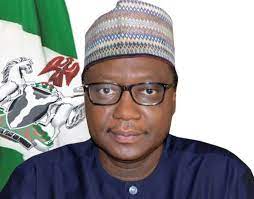
However, under the leadership of Dr. Mohammed Bello Shehu, a quiet but profound revolution is taking place.
Since assumption as Chairman, Dr. Muhammad Bello Shehu has been repositioning RMAFC to meet the standard for 21st-Century Fiscal Governance. This is what expert call “The Shehu Doctrine”.
The new approach has effectively shifted the Commission’s focus from mere distribution to aggressive mobilisation, oversight, and legislative modernization.
As the country navigates the fiscal realities of 2026, it is clear that the bold strategic measures evolved under his leadership have effectively updated the Commission and repositioned it as the vanguard of Nigeria’s economic sustainability.
For decades, the RMAFC was often sidelined by a lack of statutory “teeth,” always relying on data provided by revenue-generating agencies (RGAs) rather than independent verification.
Dr. Shehu identified this as a critical weakness in the federation’s fiscal integrity, hence introduced measures that changes the Commission’s operations from passive observer to proactive Auditor
One of his most significant strategic moves was the push for the RMAFC Act 2025. This landmark legislation repealed the obsolete 2004 Act, granting the Commission enhanced powers to:
Directly monitor the books of oil and gas companies and other major revenue earners and conduct Independent Audits.
By securing legislative backing, embracing digital transformation, and insisting on independent audits, the Commission has finally become the effective fiscal watchdog it was always intended to be. The law has empowered the Commission to recover unremitted funds and remit them into the Federation Account.
So far, Dr. Shehu is spearheading a data-driven review, prioritizing subnational governments to ensure that States and Local Governments have the liquidity to tackle grassroots development.
According to experts, this wasn’t just a political adjustment; it was an economic necessity to decentralize growth and reduce the fiscal burden on the center.
The repositioning of the Commission is also visible in its technical evolution. The introduction of the Automated Revenue Monitoring System (ARMS) has transitioned the Commission from manual oversight to a modern approach, tracking every tax in real-time, thereby significantly reducing the margin for human error or institutional corruption.
With the Nigeria Tax Act 2025 now in full swing, the Commission has played a pivotal role in ensuring that the expansion of the tax base does not lead to double taxation. The Commission has fostered a more business-friendly environment while simultaneously increasing the volume of non-oil revenue available for allocation.
Dr. Shehu is by all standard leaving a “Legacy of Fiscal Discipline”, that’s gradually shifting from a “sharing” culture to a “saving and monitoring” practice.
Through these bold strategic measures, the RMAFC is no longer just watching the clock; it is setting the pace for a more transparent and prosperous Nigeria.