


By Salisu Ibrahim
Over two million underaged children are living in Kano in various Streets and under bridges, a survey conducted by a non governmental organization has revealed.
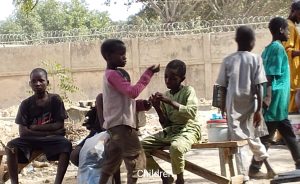
Global Improvement of Less Privileged Persons Initiative (GIOPPINI), the organisation that conducted the survey made the discovery, warning that the State is “living on a keg of gunpowder.”
“These Street Urchins sleep in unsafe and unhygienic environment in Kano and are exposed to various health and safety hazards everyday,” the Executive Director of the group, Mohammed Ali Mashi told Journalists in an interview.
Mashi sounded the alarm saying that to live in an unsafe environment, is hazardous to the victims and the State at large.
The research and scientific survey our organisation conducted further revealed that several locations across Kano metropolis, among them Railway Station area, Nassarawa Hospital Road, Dangi Bridge, Zoo Road, Ado Bayero Bridge known as (Gadar Lado), New Road in Sabon Gari, Mariri and Kofar Ruwa Parks and the premises of Race Course, Central Hotel are the most notorious areas where these children are seen.
“The situation is very alarming and we are calling on government agencies, community leaders, religious institutions and Civil Society Organizations(CSOs) to join hands together in tackling the escalating crisis,” he warned.
Although, we realized that almost all these children migrated from neighboring states, some from rural communities in Kano under the pretext of seeking Quranic education, but they ended up sleeping in an unsafe environments”, he said.
This development is dangerous to the State’s security and from our survey, hunger and lack of proper care are responsible for their predicament, the executive director explained.
“Unless urgent measures are taken, Kano State risks becoming a “powder keg,” as the unchecked activities of these street children could lead to widespread insecurity and social unrest, Mashi warned.
However, due to how these children abandoned their respective schools in search of food and survival, they become disconnected from the education process entirely and are drawn into street life, which exposes them to crime, exploitation and eventual conflict with the law.
“The issue is not only a humanitarian concern but also a threat to peace and stability in the state”, he emphasised.
The big task before our religious leaders and clerics is sensitizing parents and guardians on the dangers of neglecting their children and the wrath of their action before Allah.
“While the pursuit of Quranic knowledge is noble, it must be balanced with proper welfare and supervision to prevent children from drifting into destitution,” he noted.
He therefore urged stakeholders to prioritize the rehabilitation and reintegration of these children through structured programmes that provide shelter, food, healthcare, and education.